
Grilled Octopus
This Greek-style grilled octopus recipe gives you perfectly tender octopus with smoky, charred edges. Finished simply with extra virgin olive oil, fresh lemon, and parsley, it’s a light, flavourful dish that’s surprisingly simple and always impressive. The secret is cooking the octopus slowly in its own juices before giving the tentacles a quick char on a hot grill. No poaching liquid required!
I wasn’t a hugely fussy eater as a child, so it’s probably no surprise that grilled octopus is something I’ve been eating for a very long time. I used to love going to a local taverna in Larnaca with my grandpa and ordering the fish meze, and we’d always get the octopus.
The challenge most people have when cooking octopus at home is getting it tender rather than ending up with a tough, chewy mess. There are countless methods out there involving everything from boiling and braising to adding wine, vinegar, and even corks to the cooking liquid. This is the method I come back to every time, and it has never failed me.
My secret is skipping the cooking liquid entirely. Not even my dad believed me when I first told him! The octopus releases plenty of its own liquid as it slowly cooks, essentially braising in its own juices until wonderfully tender. Why add a poaching liquid when the octopus can provide its own?!
Why You’ll Love This Grilled Octopus Recipe
- Tender, never rubbery – Slowly cooking the octopus before grilling gives the connective tissue time to soften, so you get tender meat rather than something tough and chewy.
- You don’t need a poaching liquid – There’s no giant pot of seasoned water, wine, or vinegar here. The octopus releases a surprising amount of liquid as it cooks, and I let it gently cook in that instead.
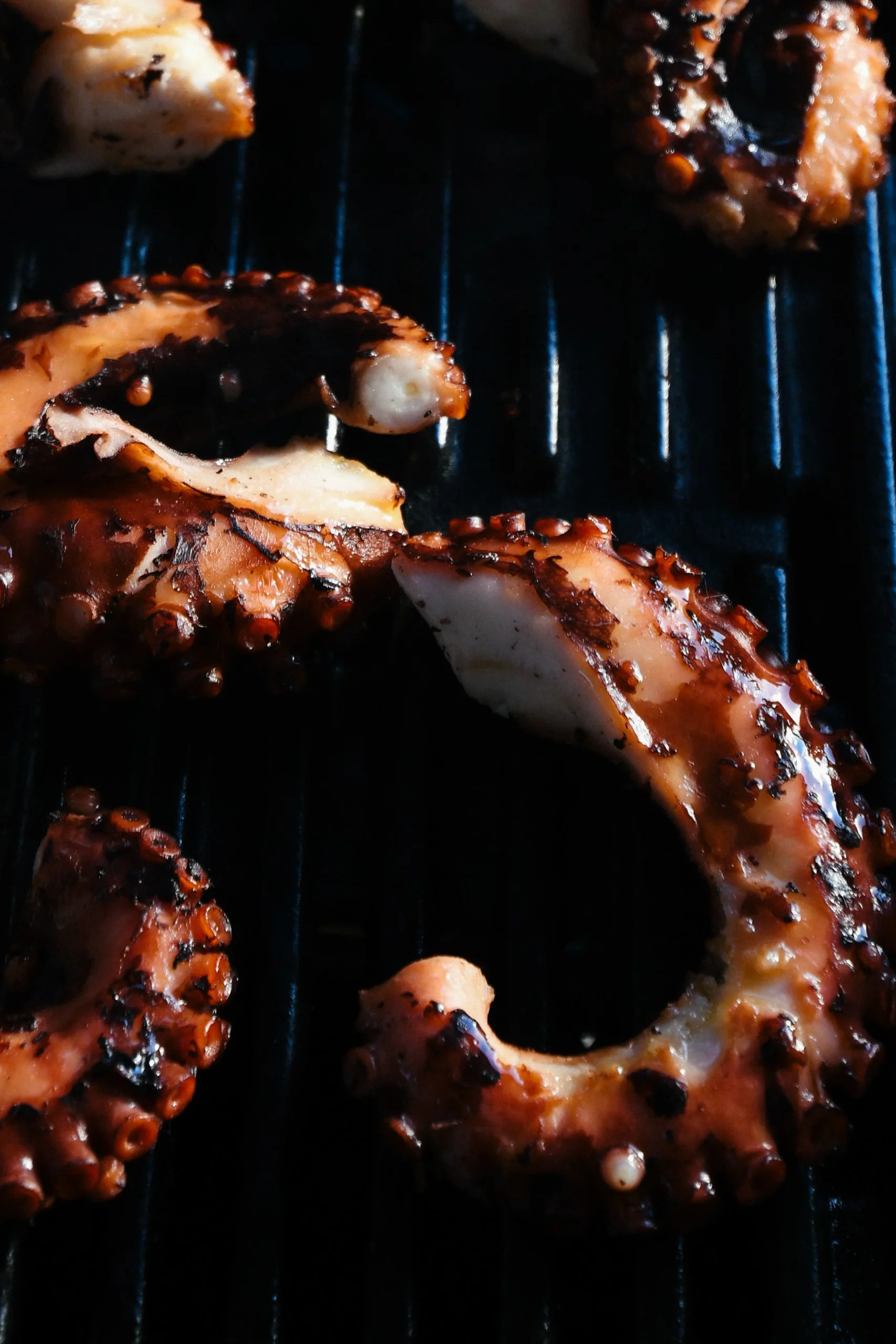
- The grill is just for the char – By the time the octopus hits the BBQ, it’s already tender. A few minutes over high heat gives the tentacles smoky, crisp edges without drying them out.
- Simple Mediterranean flavours – Good extra virgin olive oil, fresh lemon and parsley are really all it needs.
The Secret to Tender Grilled Octopus
If you’ve ever had rubbery octopus, the problem probably wasn’t the grilling. The key to grilled octopus is tenderising it before it ever reaches the grill.
My preferred method is done by placing the whole cleaned octopus in a heavy-bottomed casserole, covering it, and cooking it over the lowest heat your stove can produce.
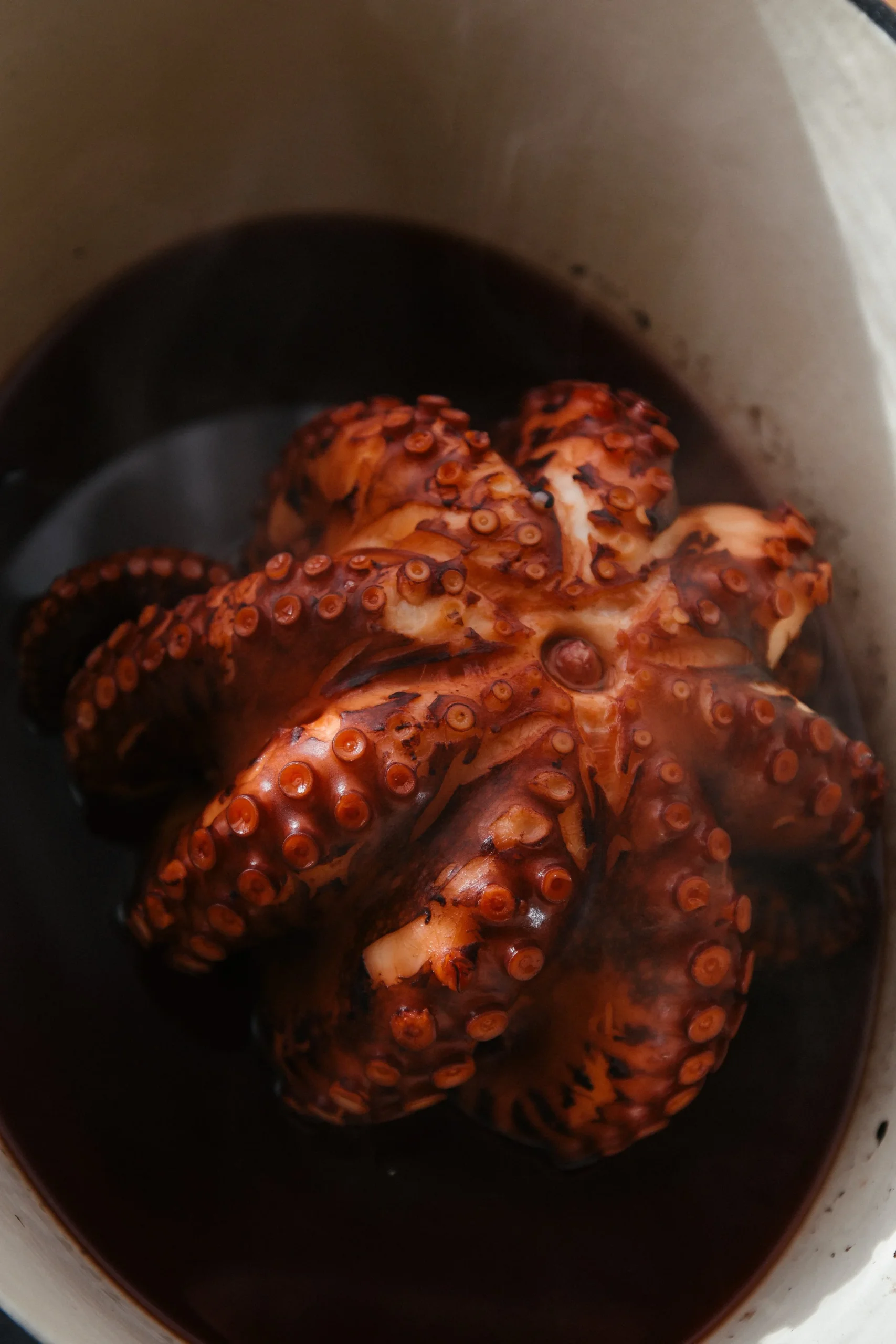
As the octopus heats, it releases quite a remarkable amount of its own liquid. Keeping the lid on traps that moisture inside the pot, allowing the octopus to cook gently until tender.
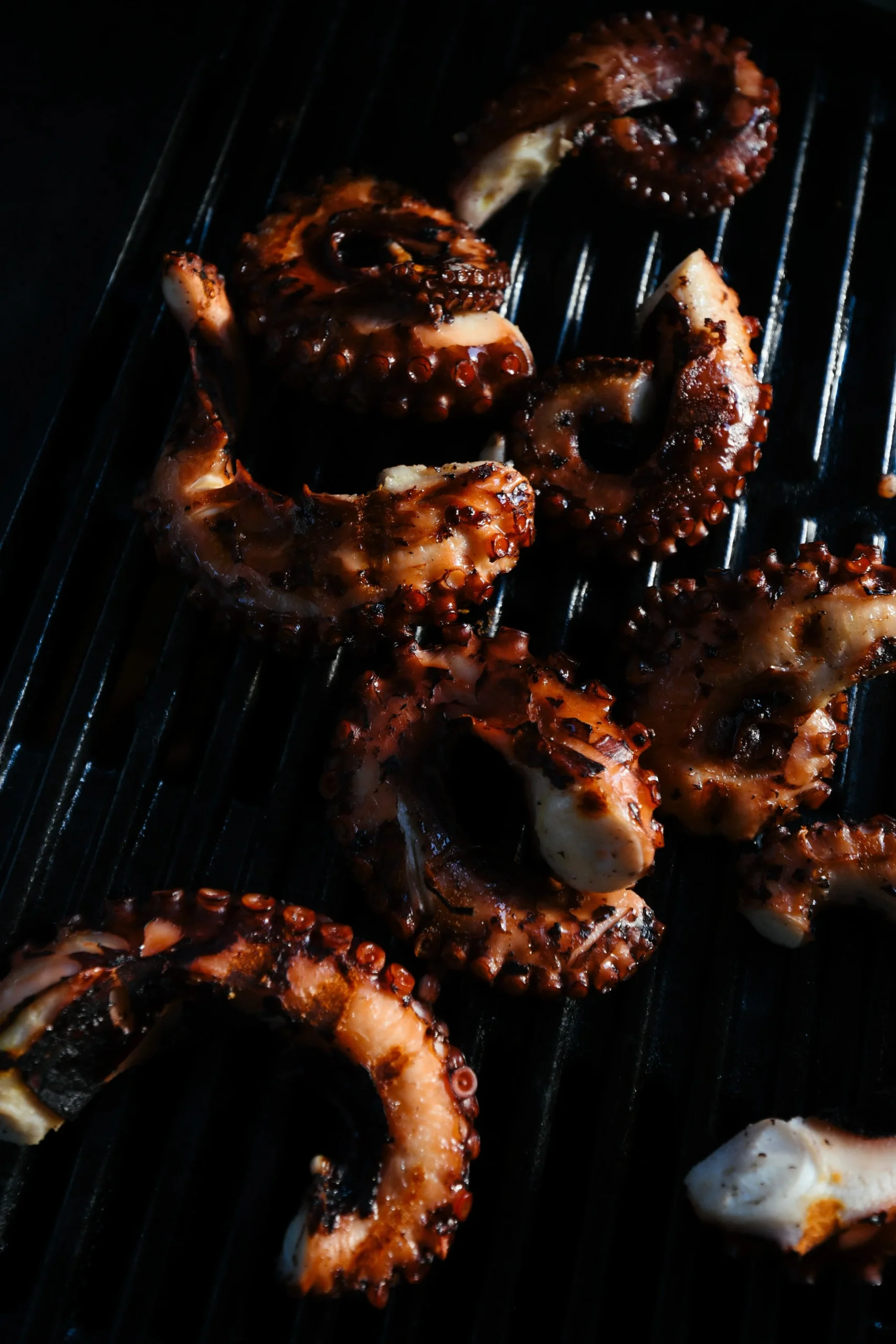
Only once it’s tender do I cut away the tentacles, drizzle them with olive oil and transfer them to a very hot grill. At that stage we’re not trying to cook the octopus through but giving it beautiful colour and smoky char.
Fresh vs. Frozen Octopus
I actually prefer buying a pre-cleaned, snap-frozen octopus from a good fishmonger.
Freezing isn’t something to avoid when it comes to octopus. The freezing and thawing process helps tenderise the flesh, which is exactly what we want for this grilled octopus recipe. It also means I can buy an octopus that’s already been properly cleaned and ready to cook once defrosted.
One thing to bear in mind is the weight. A frozen octopus can weigh a good 200-300g more than it does once completely thawed, so I recommend weighing it after defrosting. This will give you a much better indication of the cooking time you’ll need.
If you’re buying fresh octopus, ask your fishmonger to clean it for you. It saves quite a bit of work at home.
How to Defrost Octopus
If you’ve bought frozen octopus, allow it to defrost completely in the refrigerator, which typically takes about 24 hours for a whole octopus. Once thawed, drain off any excess liquid and weigh it before cooking.
Ingredients You’ll Need
One of the things I love most about Greek grilled octopus is just how little it needs.
- Whole octopus – I use a 1.5-1.6 kg whole octopus, weighed after defrosting. Ask your fishmonger to clean it for you. Frozen is actually my preference here because the freezing and thawing process helps tenderise it.
- Extra virgin olive oil – Drizzle this over the cooked tentacles before grilling. It helps encourage that lovely char and adds richness.
- Fresh lemon – Be generous. Fresh lemon juice cuts through the richness of the octopus and is essential for me.
- Fresh parsley – A scattering of finely chopped parsley is all you need to finish.
- You can also add a little dried oregano or flaky sea salt at the end if you like, but I tend to keep mine very simple.
How to Cook Octopus Before Grilling
If you’ve bought frozen octopus, allow it to defrost completely in the refrigerator before cooking. Once thawed, weigh it so you can better estimate the cooking time. Here’s how to cook frozen octopus once thawed:
- Place the whole octopus into a heavy-bottomed pan or casserole with a well-fitting lid.
- Put the lid on and place the pan over the smallest flame or lowest heat your stove can produce. For a 1.5-1.6kg octopus, I generally allow somewhere between 1 hour 30 minutes and 1 hour 50 minutes. A 1.6kg octopus typically takes me around 1 hour 50 minutes. You’ll notice quite a lot of liquid accumulating in the pan as it cooks. That’s exactly what we want.
- Check the octopus occasionally. If it starts sticking slightly to the bottom of the pan, add just a splash of water to loosen it and rotate the octopus.
How to Tell When Octopus Is Tender
Cooking time is a guide rather than an absolute rule. Octopus varies in size and thickness, so tenderness is ultimately a better indicator than the clock.
Start checking towards the lower end of the suggested cooking time. Insert the tip of a small sharp knife or a metal skewer into the thickest part of one of the tentacles.
It should slide in easily with very little resistance. If the flesh still feels firm or rubbery, put the lid back on and continue cooking over low heat, checking every 10-15 minutes.
How to Grill Octopus
Once tender, carefully remove the octopus from the pan and allow it to cool until it’s cool enough to handle.
- Cut each tentacle away from the head so you have individual pieces. I also like to trim off the thin ends of the tentacles and save them along with the head to make marinated octopus later. Absolutely nothing goes to waste around here!
- Preheat your BBQ or grill until very hot. Drizzle the cooked tentacles lightly with extra virgin olive oil, then place them directly onto the hot grill.
- Grill for just a few minutes on each side, turning as needed, until the outside has developed a deep golden colour and lovely charred edges. Remember, the octopus is already completely cooked. This stage is purely about adding smoky flavour and texture, so don’t leave it on the grill for ages or you risk drying it out.
- Transfer to a serving platter, scatter generously with chopped fresh parsley and finish with plenty of fresh lemon juice.
My Tips for Perfect Grilled Octopus
- Buy frozen octopus. This is one of those rare occasions where frozen can actually work in your favour. I find the freezing and thawing process gives me reliably tender results.
- Weigh it after defrosting. Frozen octopus holds additional weight, so use the thawed weight of your raw octopus when estimating your cooking time.
- Don’t add water unless you need it. It might feel strange putting an octopus into an empty pan, but trust the process! It will release plenty of liquid as it cooks.
- Keep the heat very low. We’re gently cooking the octopus until tender, not boiling it aggressively.
- Check tenderness rather than relying solely on time. If a small knife doesn’t easily pierce the thickest part of a tentacle, it needs longer.
- Get the grill properly hot. You want to develop char quickly without leaving the already-tender octopus over the heat for too long.
- Don’t over-grill it. This is probably the biggest mistake you can make after doing all the work to get it tender. Think quick char rather than a second cooking process.
What to Serve with Grilled Octopus
For me, grilled octopus doesn’t need much more than a very generous squeeze of lemon, good olive oil and fresh parsley. To make it part of a Greek or Eastern Mediterranean spread, serve it alongside warm pita, olives, a crisp Greek salad, hummus, tzatziki or fava.
If you’re looking for some more Greek-inspired recipes, check out my Greek lemon potatoes and one-pot chicken and pilaf!
It’s also wonderful served as part of a seafood meze with plenty of small dishes around the table, which is still my favourite way to eat it.
Make Ahead and Storage
Make ahead: You can cook the octopus until tender ahead of time, allow it to cool, and refrigerate it in an airtight container until you’re ready to grill. This makes it a great option when entertaining because all that’s left to do before serving is give the tentacles a quick char.
Fridge: Store leftover cooked octopus in an airtight container in the refrigerator for up to 3 days.
Reheating: I prefer leftovers at room temperature or briefly reheated on a hot grill or frying pan. Avoid prolonged reheating, which can make the octopus dry.
You can also use leftover tentacles and the head to make a marinated octopus salad with olive oil, lemon and herbs.
FAQs
Do you have to boil octopus before grilling?
No. The octopus does need to be tenderised and fully cooked before grilling, but boiling it in water isn’t the only way to do that. My method slowly cooks the octopus in a covered pot using the liquid it naturally releases. Once tender, it only needs a quick char on the grill.
Why is my grilled octopus rubbery?
If the octopus is rubbery, it most likely needs more time during the initial slow-cooking stage. Don’t transfer it to the grill until a small sharp knife or metal skewer slides easily into the thickest part of a tentacle. Grilling for too long can also dry out already-cooked octopus, so keep the final grilling stage brief.
Can I grill pre-cooked octopus?
Yes. If you’ve bought fully cooked octopus tentacles, you can skip the slow-cooking stage. Pat them dry, lightly coat them in olive oil, and grill over high heat just until they’re heated through and nicely charred.
Grilled Octopus
Ingredients
- 1.5-1.6 kg whole octopus – ask your fishmonger to clean it for you
- Extra virgin olive oil for grilling
- Lemon and fresh parsley to serve
Instructions
- If you’ve bought frozen octopus, defrost it entirely before cooking.
- Place the whole octopus into a heavy bottom pan/casserole with absolutely nothing else – I mean it. Just put it in there. No oil, no salt – nada.
- Pop the lid on, place on the smallest flame/heat your stove can produce and let it be for 1h30-1h50m subject to the size of your octopus.
- NB: For a 1.6kg octopus I typically cook it for about 1h50m. The octopus will be tender! So tender – it’s beaut.
- Check it occasionally. If it’s sticking slightly to the base of your pan, add a dash of water to loosen, and rotate the octopus.
- Remove the octopus from the pan and allow to cool enough to handle.
- Cut the tentacles away from the head so you have individual pieces – I also like to cut the thin ends off from the tentacles and save them to make some marinated octopus along with the head, but you don’t have to do this of course 🙂
- Drizzle the tentacles with olive oil and grill on a hot BBQ for a few min on each side until nicely charred.
- Serve with fresh chopped parsley and lots of fresh lemon juice.